

Introduction
ADHD is often associated with obvious hyperactivity, impulsiveness, or difficulty sitting still. But for many women, the signs can be less noticeable. Difficulty staying organized, constantly feeling overwhelmed, forgetfulness, trouble managing time, or struggling to maintain focus may be dismissed as stress, anxiety, or simply “having too much going on.”
Some women may develop strategies that help them compensate for these difficulties, which can make their struggles less visible to others. As responsibilities increase in adulthood, however, managing work, relationships, family life, and everyday tasks may become increasingly challenging.
Understanding how ADHD can present in women is an important first step. Recognizing possible symptoms does not mean someone has ADHD, a proper evaluation considers symptoms, history, how they affect daily functioning, and other possible explanations.
What Does ADHD Look Like in Women?
ADHD can affect attention, organization, impulse control, time management, and the ability to regulate activity and focus. However, the way these difficulties appear in everyday life can vary considerably from person to person.
Some women may experience less obvious outward hyperactivity and instead struggle with symptoms that are easier to overlook, such as:
- Frequently losing or misplacing important items
- Starting tasks but struggling to finish them
- Forgetting appointments, deadlines, or everyday responsibilities
- Underestimating how long tasks will take
- Becoming easily distracted during conversations or work
- Feeling overwhelmed when managing several responsibilities
- Procrastinating even when a task is important
- Struggling to maintain routines and organization
- Experiencing restlessness or feeling constantly “on the go”
- Acting or speaking impulsively at times
ADHD Doesn’t Look the Same in Every Woman
Not every woman with ADHD experiences these difficulties in the same way. Symptoms can also overlap with other concerns, including anxiety, depression, sleep difficulties, and chronic stress.
That’s why recognizing a few familiar experiences isn’t enough to determine whether someone has ADHD. Diagnosis requires a comprehensive professional evaluation.
Why ADHD in Women Can Go Unnoticed
ADHD can be overlooked in women for several reasons. Symptoms are not always expressed in the stereotypical way people associate with ADHD, and some women become skilled at compensating for difficulties or hiding how much effort everyday tasks require.
A woman may appear organized or successful from the outside while privately struggling with missed deadlines, unfinished tasks, forgetfulness, mental overload, or the amount of effort required to stay on top of responsibilities.
Common Reasons ADHD May Be Missed
Symptoms may be less disruptive.
Some women experience more difficulties with attention and organization than obvious hyperactive or disruptive behavior, making their struggles easier to miss.
Symptoms may be attributed to something else.
Difficulty concentrating, feeling overwhelmed, restlessness, or problems completing tasks can overlap with anxiety, depression, sleep problems, stress, and other conditions.
Compensating can hide difficulties.
Detailed planners, excessive reminders, working late, perfectionistic routines, or relying heavily on structure may help someone manage symptoms while also masking how difficult everyday functioning feels.
Expectations can influence what gets noticed.
Social expectations around organization, caregiving, school, work, and household responsibilities may affect how difficulties are interpreted and whether someone seeks support.
Being overlooked does not mean the difficulties aren’t real. A professional evaluation can help determine whether ADHD—or another condition—is contributing to them.
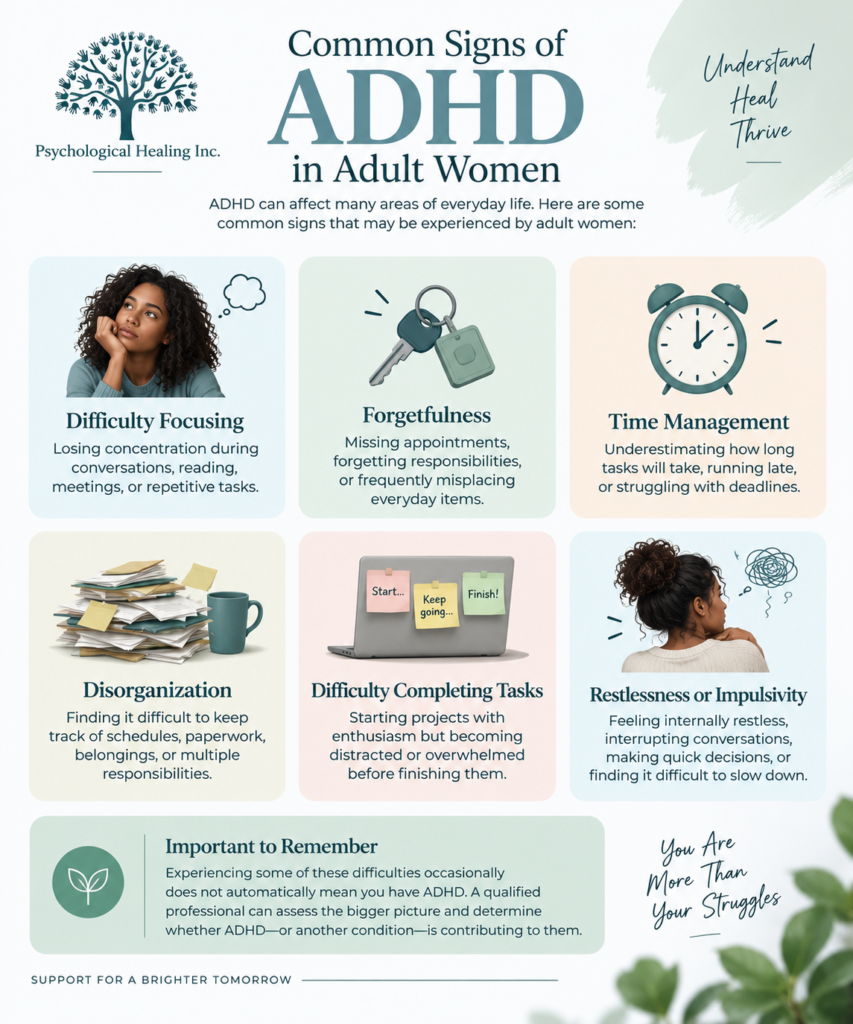
Common Signs of ADHD in Adult Women
ADHD symptoms can affect many parts of everyday life, from work and relationships to household responsibilities and personal routines. Some common experiences may include:
Difficulty focusing
Losing concentration during conversations, reading, meetings, or repetitive tasks.
Forgetfulness
Missing appointments, forgetting responsibilities, or frequently misplacing everyday items.
Time-management difficulties
Underestimating how long something will take, running late, or struggling with deadlines.
Disorganization
Finding it difficult to keep track of schedules, paperwork, belongings, or multiple responsibilities.
Difficulty completing tasks
Starting projects with enthusiasm but becoming distracted or overwhelmed before finishing them.
Restlessness or impulsivity
Feeling internally restless, interrupting conversations, making quick decisions, or finding it difficult to slow down.
Important to Remember
Experiencing some of these difficulties occasionally does not automatically mean you have ADHD. ADHD involves a persistent pattern of symptoms that affects functioning, and similar difficulties can have other causes. A qualified professional can assess the broader picture.
When Should You Consider an ADHD Evaluation?
Recognizing yourself in some ADHD symptoms does not necessarily mean you have ADHD. Everyone can experience forgetfulness, distraction, procrastination, or difficulty staying organized from time to time.
A professional evaluation may be worth considering when these difficulties are persistent, occur across different areas of life, and regularly interfere with your ability to function or meet everyday responsibilities.
You might consider speaking with a qualified mental health professional if:
- Attention or organization difficulties regularly affect your work, education, or relationships
- You frequently struggle with deadlines, appointments, or everyday responsibilities
- Staying organized requires an exhausting amount of effort
- You have experienced similar difficulties since childhood or adolescence
- Symptoms continue even when you are trying different strategies to manage them
- You are unsure whether your difficulties could be related to ADHD, anxiety, depression, or another concern.
What Happens During an ADHD Evaluation?
An ADHD evaluation typically looks at more than a checklist of current symptoms. A clinician may explore your developmental history, current difficulties, how symptoms affect daily functioning, and whether another condition could better explain what you’re experiencing.
There is no single online quiz or symptom that can confirm ADHD. A comprehensive assessment helps create a clearer picture of what may be contributing to your difficulties and what type of support may be appropriate.
Treatment and Support for ADHD in Women
If an evaluation indicates ADHD, treatment can be tailored to the person’s symptoms, needs, and how ADHD affects their everyday life. There is no single approach that is right for everyone.
Support may include psychotherapy, behavioral strategies, practical skills for organization and time management, lifestyle changes, and, when appropriate, medication discussed with a qualified medical professional.
Therapy can also help address challenges that may occur alongside ADHD, such as anxiety, low self-esteem, emotional difficulties, relationship stress, or feeling overwhelmed by everyday responsibilities.
Practical Strategies May Help Too
- Break large tasks into smaller, manageable steps
- Use calendars, reminders, and written routines
- Create consistent places for frequently misplaced items
- Reduce unnecessary distractions when completing important tasks
- Prioritize sleep, exercise, and regular daily routines
- Focus on realistic systems rather than expecting perfect organization
The goal isn’t simply to become “more productive.” Effective support should help a person understand how their brain works, reduce difficulties that interfere with daily life, and develop strategies that work for them.
Wondering If ADHD Could Be Affecting You?
If difficulties with focus, organization, time management, or everyday responsibilities are affecting your quality of life, speaking with a qualified mental health professional can help you better understand what may be going on.
The team at Psychological Healing Inc. can help you explore appropriate next steps and determine what support may be right for your individual needs.
Get in Touch
Call Us
(949) 229-5820
Email Us
admin@psychologicalhealing.net
Frequently Asked Questions About ADHD in Women
What are common signs of ADHD in adult women?
Common signs may include difficulty maintaining attention, forgetfulness, disorganization, procrastination, poor time management, difficulty completing tasks, restlessness, and impulsivity. Symptoms vary between individuals, and experiencing some of these difficulties does not necessarily mean someone has ADHD.
Why is ADHD sometimes missed in women?
ADHD symptoms in some women may be less outwardly noticeable or may be attributed to stress, anxiety, depression, or other concerns. Some women also develop strategies to compensate for their difficulties, which can make symptoms less apparent to others.
Can ADHD be diagnosed in adulthood?
Yes. Adults can be evaluated for ADHD even if they were not diagnosed during childhood. Because ADHD is a neurodevelopmental disorder, an assessment generally considers whether symptoms were present earlier in life as well as how they currently affect daily functioning.
How do I know if I should get evaluated for ADHD?
Consider speaking with a qualified professional if difficulties with attention, organization, impulsivity, or time management are persistent and regularly interfere with work, education, relationships, or everyday responsibilities. An evaluation can also help determine whether ADHD or another condition may better explain the difficulties you’re experiencing.